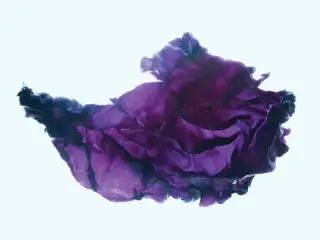
After Growth
on until 3 stycznia 2027 · Galeria Miejska Arsenał
- When
- on until 3 stycznia 2027
- Where
- Galeria Miejska ArsenałStary Rynek 6, Poznań
- Admission
- Free admission
In brief
Anna Goebel presents works made from dried, stitched and pressed plant parts — leaves, skins and seeds. Combining photography with objects and installation forms, she explores the materiality of remnants and the everyday economy of reuse.
Full descriptionGood to know
- No Polish needed
- yes
Anna Goebel
After Growth
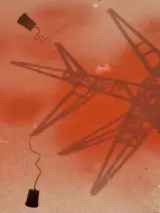
Plant bodies — cabbages, goldenrods, avocados and bananas — undergo processes of drying, stitching, powdering and photographing in Anna Goebel’s works. These processes reveal other ways in which matter can be active. What was once a biological structure also becomes an aesthetic one, while what served a metabolic or reproductive function in a plant’s life begins to operate as a surface, rhythm, texture, image or object. Some bodies can still be recognised; others can no longer be identified.
The outer leaves of cabbages and banana skins, as well as avocado shells and stones, are kitchen waste, while Canadian and giant goldenrods are invasive plants. They all belong, then, to the realm of what is unwanted and removed from the order of utility, consumption and aesthetic appeal. Goebel works with precisely this kind of matter, bringing to light its processes and structures beyond the logic of rapid consumption and excess. The artist works slowly, spending a long time with discarded matter and allowing the result to emerge through the interplay of her gestures, time and the properties of the material.
In this sense, Goebel’s works can also be read through the private economy of everyday life. They invite us to notice small gestures of keeping, setting aside, storing and reusing. This is not a grand narrative about recycling, but one on the scale of the home, the table, the studio and the person who recognises value in what is usually quickly discarded. An outer cabbage leaf, a shell, a stone or a fragment of goldenrod does not return either to its former function or to the biological cycle. Instead, it begins to circulate between home, studio, image and object, becoming material for thinking, looking and constructing forms. This economy of remnants does not, then, consist in restoring things to usefulness in the simple sense, but in changing the conditions under which they operate. What has not been consumed, or is no longer needed, begins to work in a new way.
A remnant functions differently from a living plant, but it is no less active. The materiality of what remains after growth reveals other, unexpected ways of exerting an influence. Plant forms — bodies bearing traces of the earlier organisation of matter through the processes of growth, nourishment, photosynthesis, reproduction and decay — enter the artist’s works after being harvested, used or discarded. They are not, however, treated as worthless: the artist draws out their fibrousness, networks of veins, surfaces, colours, and hidden properties and structures. Rather than giving plant remnants a new form, she joins in their ongoing process of becoming. This is how objects and images come into being in which the material’s original source is not always recognisable. Once processed, the preserved structures become fragmentary and ambiguous. The plant matter nevertheless endures, changing its scale, texture and the way it can be perceived.
If After Growth is understood literally, the matter the artist works with exists after the phase of biological growth. The exhibition’s title also opens up a broader field of meanings, pointing to the concept of post-growth as a critique of constant acceleration, producing ever more, consuming ever more and endlessly replacing one thing with another. The exhibition therefore questions the understanding of development as simple multiplication, while also exploring what happens to material form after its biological growth, use, disposal and loss of original function.
The artist’s practice is not based on rapid production or the spectacular transformation of waste into an attractive object. Rather, it involves attentively following matter through its fragility, resistance, smell, drying, fading and decay. In this sense, Goebel’s works can be read as a practice of responsible creation. The artist does not impose an entirely external order on the materials, but explores what can emerge when working with limited means and with what already exists, has been collected or found, or remains after other processes. After Growth does not therefore signify the end of form, but its continued, slower and less obvious endurance in remnants, traces and material transformations.
Monika Bakke
Credits
This week w Poznaniu
 La PerraKino Muza w Poznaniu - SALA 3, Poznań
 SONGS OF THE FOREST | SENIOR AT MUZAKino Muza w Poznaniu - SALA 1, Poznań
 Our RevolutionKino Muza w Poznaniu - SALA 2, Poznań
Source: Galeria Miejska Arsenał, data retrieved . Details may change, so check them with the organiser.