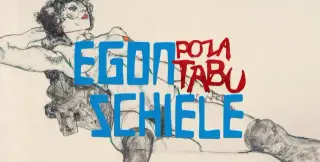
Egon Schiele: Beyond Taboo | Art on Screen | EDKA 2026
niedziela, 22 listopada, 17:30–20:00 · Kino AMOK - Scena Bajka
- When
- niedziela, 22 listopada, 17:30–20:00
- Where
- Kino AMOK - Scena BajkaDolnych Wałów 3, Gliwice
In brief
Egon Schiele’s biography explores his life and work through the lens of his paintings, scandals and personal relationships. The film takes viewers to Vienna, Prague and smaller places associated with the artist, showing how eroticism and death shaped his painting.
Full descriptionFilled with masterpieces, Egon Schiele: Beyond Taboo presents treasures from the world’s largest collection of Schiele’s paintings at Vienna’s Leopold Museum. Nudity no longer shocks anyone, but what Schiele truly lays bare is the body’s vulnerability to the passage of time. And that remains a powerful taboo.
Egon Schiele (1890–1918) was a young man from the Austro-Hungarian provinces whose art now adorns the world’s most important museums: a provocateur accused of spreading pornography, a pioneer of Expressionism, and an artist whose canvases entwine death and desire in a lover’s embrace. Schiele died at just 28, leaving behind an astonishingly rich body of work that turned aesthetic conventions upside down. Egon Schiele: Beyond Taboo paints a fascinating portrait of a brilliant artist, a child of a turbulent era that culminated in the First World War and a pandemic, who used eroticism to reach what is most fragile, intimate and defenceless in us.
The film explores what shaped the artist’s inner world. We visit decadent Vienna and Prague steeped in Art Nouveau, from which he fled to the provinces; we travel to Český Krumlov and Neulengbach in Austria, where he scandalised the locals. We learn about his complicated relationships with women: his fascination with his sister Gerti, his passionate relationship with his muse Valerie Neuzil, and his marriage to Edith Harms, marked by distance. One of the key figures in this biography is also his mother, who was indifferent to her son’s talent. “I painted so that I would be noticed,” Schiele wrote.
He created his work at a time when bourgeois norms were being challenged and art was flourishing, in the shadow of a crumbling empire. It is no surprise that the documentary’s creators highlight the similarities between the artist and Franz Kafka. Both were preoccupied with the connection between sex and death, lived with a sense of impending catastrophe, and radically transformed the landscapes of painting and literature.
Credits
This week w Gliwicach
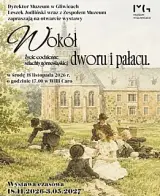 Opening: Around the Manor House and Palace. Everyday Life of the Upper Silesian NobilityMuzeum w Gliwicach - Willa Caro, Gliwice
 Around the Manor House and Palace. Everyday Life of the Upper Silesian NobilityMuzeum w Gliwicach - Willa Caro, Gliwice
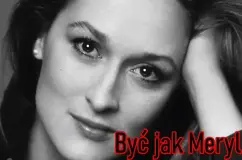 “Being Meryl”Centrum Kultury Studenckiej Mrowisko, Gliwice
Source: GAMA, data retrieved . Details may change, so check them with the organiser.
Nearby in the coming days
 Exhibition “40 Faces of the Witcher in Gliwice”Stacja Artystyczna Rynek, Gliwice
 Culture and Art in Urban SpacesWszystkiego Zielonego, Gliwice
 Ethnoalternative. A New Look at Folk Fashion – a photographic exhibition from the collections of Muzeum ŚląskieMiejska Biblioteka Publiczna w Gliwicach. Biblioteka Centralna, Gliwice
 Silesian Alphabet — Exhibition of Works by Arkadiusz “FolteC” FoltyńskiMiejska Biblioteka Publiczna w Gliwicach. Biblioteka Centralna, Gliwice