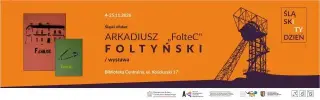
Silesian Alphabet — Exhibition of Works by Arkadiusz “FolteC” Foltyński
on until 25 November · Miejska Biblioteka Publiczna w Gliwicach. Biblioteka Centralna
- When
- on until 25 November
- Where
- Miejska Biblioteka Publiczna w Gliwicach. Biblioteka CentralnaKościuszki 17, Gliwice
In brief
Arkadiusz Foltyński presents “Silesian Alphabet” — a series of images in which each letter is paired with a Silesian word and a simple, clear image. The works combine the language of the Silesian dialect with the aesthetic of stencil graffiti; the exhibition will appeal to fans of street art and Silesian culture.
Full descriptionGood to know
- No Polish needed
- yes
“Silesian Alphabet” is a street art journey through the language and culture of Silesia. Each letter of the alphabet is paired with an image and a Silesian name for the object, animal or phenomenon depicted. “Aszynbecher”, “Byfyj”, “Charboł” and the entries that follow form a distinctive visual dictionary of the Silesian dialect. Familiar things are given unexpected, sometimes long-forgotten names, and words are paired with simple, clear images.
The series combines respect for the Silesian dialect with Arkadiusz Foltyński’s characteristic sense of humour and the language of stencil graffiti. It is an alphabet, a dictionary and a collection of images all at once — a record of a fragment of Silesian identity in a light, contemporary form touched with nostalgia.
“Silesian Alphabet” shows that language can be more than something we speak and write. It can also be seen.
ARKADIUSZ “FolteC” FOLTYŃSKI — he did not start in galleries. He started on the street.
Arkadiusz Foltyński, who works under the pseudonym FolteC, belongs to a generation of artists for whom the stencil was not a fashionable technique, but one of the first available tools for artistic self-expression. In the late 1980s, before stencil graffiti had become a recognised language of contemporary street art, his first works appeared on the streets of Upper Silesia — in Ruda Śląska, where he lived at the time, as well as in Zabrze, Gliwice and Bytom. They were simple in form, but not in their message. They combined image, word, absurdity, irony and observation of reality. Instead of monumental declarations, one frame, one sentence, one gesture was often enough. The stencil became a kind of shorthand — a visual comment on the world. After moving to Lublin in the early 1990s, Arkadiusz Foltyński’s artistic activity fell silent for a time. That did not, however, mean the end of the story. Years later, he returned to working with stencils, retaining its most important element: the manual, physical process. A design, paper, a knife, successive stencil layers and an aerosol can. Foltyński describes his works as “analogue, hand-made memes”. It is an apt description, because their impact often lies in the immediate connection between image and thought. The artist draws on the language of popular culture, film, history, music and everyday life, but not simply to quote familiar motifs. He transforms them. Shifts the emphasis. Adds a comment. Sometimes a small change is enough to make a familiar image mean something entirely different.
Memory also plays an important role in his work — the memory of places, people, culture and streets. That is why his works exist both on paper and in public spaces. A gallery is one place where he presents his work, but it is not the stencil’s natural environment. That remains the street.
Foltyński’s technique remains consistently analogue. Each design requires preparation and the hand-cutting of one or more stencils, followed by the precise application of paint. The result is an image that may seem simple at first glance. Only a closer look reveals how much work, decision-making and experience lie behind its apparent simplicity. His works bring the street together with memory, popular culture with commentary, and humour with reflection. This is art that needs no lengthy user manual. First, the image catches your eye. Then comes a smile, a moment of surprise or a question.
And when the viewer begins to wonder what the artist actually meant, the stencil has done its job.
Funded by the Minister of Culture and National Heritage as part of the grant programme “The Polish Language: The Wealth of Diversity” of the Instytut Różnorodności Językowej Rzeczypospolitej.
Machine-translated from Polish.
Credits
This week in Gliwice
 Opening: Around the Manor House and Palace. Everyday Life of the Upper Silesian NobilityMuzeum w Gliwicach - Willa Caro, Gliwice
 Around the Manor House and Palace. Everyday Life of the Upper Silesian NobilityMuzeum w Gliwicach - Willa Caro, Gliwice
 “Being Meryl”Centrum Kultury Studenckiej Mrowisko, Gliwice
Source: GAMA, data retrieved . Details may change, so check them with the organiser.
Also at Miejska Biblioteka Publiczna w Gliwicach. Biblioteka Centralna
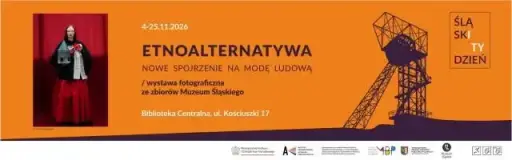 Ethnoalternative. A New Look at Folk Fashion – a photographic exhibition from the collections of Muzeum ŚląskieMiejska Biblioteka Publiczna w Gliwicach. Biblioteka Centralna, Gliwice
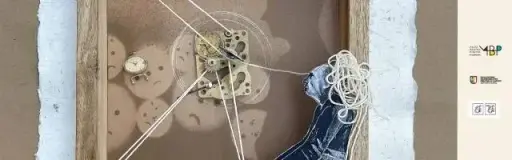 The Small Archive of Pszczyna Alarm Clocks – Zofia Siwy — exhibitionMiejska Biblioteka Publiczna w Gliwicach. Biblioteka Centralna, Gliwice
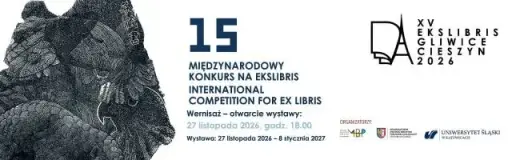 Opening: Exhibition of Award-Winning Works from the 15th International Ex Libris Competition Gliwice-Cieszyn 2026Miejska Biblioteka Publiczna w Gliwicach. Biblioteka Centralna, Gliwice
 Post-Competition Exhibition of the 15th International Ex Libris Competition Gliwice-Cieszyn 2026Miejska Biblioteka Publiczna w Gliwicach. Biblioteka Centralna, Gliwice