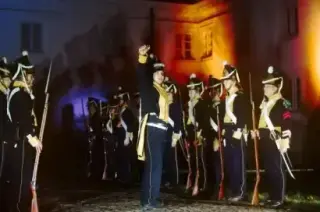
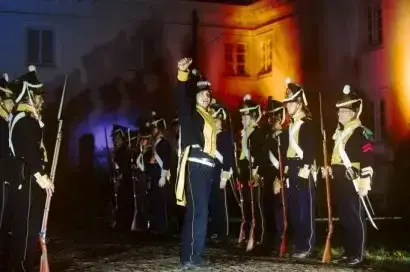
“The Odyssey” and “November Night” – the Homeric epic and Wyspiański’s myth of independence
Saturday 28 November, 11:00 · Stajnie Kubickiego, Łazienki Królewskie, Warszawa
Free admission
Not it? At this venueNearby
- When
- Saturday 28 November, 11:00 Duration: 2 h
- Where
- Stajnie Kubickiego, Łazienki KrólewskieWarszawa
- Admission
- Free admission
In brief
How did ancient epics influence Stanisław Wyspiański’s “November Night”? Jagoda Hernik Spalińska’s seminar will explore how the writer reworked Greek myths to tell the story of Polish history and collective identity, also in “The Return of Odysseus” and “Achilleis”.
Full descriptionOn the programme
- “November Night”
- “The Return of Odysseus”
- “Achilleis”
What links the ancient heroes of Homer with Polish insurgents? Stanisław Wyspiański shows that myth can become a language for telling stories about national history and identity. During a seminar led by Dr habil. Jagoda Hernik Spalińska, we will explore how Greek epics influenced “November Night”.
DOWNLOAD YOUR TICKET >> link <<
Stanisław Wyspiański grew up immersed in the literature and art of ancient Greece, whose legacy became an important source of inspiration for his work. This did not, however, mean mechanically imitating ancient models. Wyspiański creatively reworked them, giving them new meanings and using myth as a tool for telling stories about history and shaping collective consciousness. This is particularly evident in “November Night”, in which the experience of a Polish national uprising is presented through references to the world of mythology and Homeric epics. We will look at what the writer learned from Homer and how he used ancient influences to portray Polish history. We will also turn to “The Return of Odysseus” and “Achilleis” to trace other signs of Greek culture in Wyspiański’s plays.
Seminar duration: 120 minutes.
Dr habil. Jagoda Hernik Spalińska is a theatre scholar and theatre historian, and a professor at the Institute of Art of the Polish Academy of Sciences in Warsaw (Theatre Documentation). She leads postgraduate theatre studies at the Institute of Art of the Polish Academy of Sciences. From 2005 to 2010, she worked at the Drama Laboratory, where she ran, among other things, her own series of readings of ancient tragedies, “The Toxic Ancient Family”. She was a co-founder of the LD Drama School. She also worked as a dramaturg at Teatr Polski in Wrocław and Teatr Nowy in Łódź. She has published the books “Wileńskie Środy Literackie” (1998), “Życie teatralne w Wilnie podczas II wojny światowej” (2005), “Anty-Ifigenia” (2014) and “Niekochana” (2024). In 2024, she co-curated the exhibition “Ikonosfera Wyspiańskiego” at Muzeum Łazienki Królewskie and co-authored the accompanying catalogue-essay. From 2019 to 2024, she was editor-in-chief of the weekly “teatrologia.info”. She edited five volumes of plays published in the “Biblioteczka Teatrologii.pl” series.
She is also co-editor of the two-volume “Strumień pamięci teatru” (2025) and the volume “Odnalezione w obrazach” (2026). She has published texts on theatre history, among other places, in “Pamiętnik Teatralny”, “Notatnik Teatralny” and the Lithuanian journal “Menotyra”. She has written about contemporary theatre for “Dialog”, “Teatr”, “Didaskalia” and the Lithuanian “Teatras” (around 200 publications in total). She is a member of the academic committees of the journals “Witkacy!” and the Lithuanian “Meno istorijos studijos”, published by Lietuvos kultūros tyrimų institutas (Lithuanian Institute for Cultural Research). In addition to theatre history and contemporary theatre, she also works in the field of dramaturgy.
Machine-translated from Polish.
Credits
This week in Warszawa
 Candlelit Concert: Robert SkieraSala koncertowa Fryderyk, Warszawa
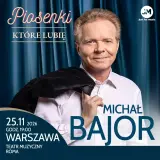 Michał Bajor – Songs I LikeTeatr Muzyczny ROMA, Warszawa
 Stand-up / Official Open Mic hosted by Bartosz ZalewskiBazar Klub, Warszawa
Source: waw4free.pl, data retrieved . Details may change, so check them with the organiser.
Also at Stajnie Kubickiego, Łazienki Królewskie
Nearby in the coming days
 Malta Festival presents: Tilda SwintonInstytut Przemysłów Kreatywnych, Warszawa
 WIESŁAW WAŁKUSKI. Posters and PaintingMuzeum Sztuki Fantastycznej, Warszawa
 BODY WORLDS PULSE - WarsawSoho Art Center, Warszawa
 Clay and Imagination – Group Exhibition of Ceramic Sculpture by Anna Wszyndybył’s StudioCentrum Promocji Kultury, ul. Podskarbińska 2, Warszawa