LET ME SING
Thursday, 8 April 2027, 19:00–20:00 · Sala koncertowa
- When
- Thursday, 8 April 2027, 19:00–20:00
- Where
- Sala koncertowaul. Krakowska 24, Opole, opolskie, 45-075, Poland, Opole
In brief
Aldona Bartnik and the Sanssouci ensemble turn to music by composers associated with the Neapolitan Baroque tradition. The programme features soprano arias and trio sonatas, as well as instrumental works by Domenico Sarro and Alessandro Scarlatti.
Full descriptionGood to know
- No Polish needed
- yes
On the programme
- Domenico Sarro – Overture to the opera “Partenope”
- Giovanni Battista Pergolesi – Trio Sonata in G major, P.12 No. 1
- Domenico Cimarosa – Aria “Ah tornar la bella aurora” from the opera “La vergine del sole”
- Gian Francesco de Majo – Recitative and aria “Accresca pietoso” from the opera “Ifigenia in Tauride”
- Johann Adolph Hasse – Trio Sonata in E minor, Op. 2 No. 1
- Alessandro Scarlatti – Toccata XI in A minor
- Domenico Sarro – Aria “No ha regione, ingrato” from the opera “Didone abbandonata”
- Francesco Provenzale – Aria “Deh rendetemi, ombre care” from the opera “La Stellidaura vendicata”
Aldona Bartnik – soprano
Sanssouci ensemble: Katarzyna Raczkowska – traverso Monika Targowska – traverso Maria Misiarz – baroque cello Tomasz Głuchowski – harpsichord Paweł Miczka – baroque violin Dominika Garncarz – baroque violin and viola
Katarzyna Karwaczyńska – presenter
Programme:
Domenico Sarro – Overture to the opera Partenope Giovanni Battista Pergolesi – Trio Sonata in G major, P.12 No. 1 Domenico Cimarosa – Aria “Ah tornar la bella aurora” from the opera La vergine del sole Gian Francesco de Majo – recitative and aria “Accresca pietoso” from the opera Ifigenia in Tauride Johann Adolph Hasse – Trio Sonata in E minor for two flutes and basso continuo, Op. 2 No. 1 Alessandro Scarlatti – Toccata XI in A minor Domenico Sarro – Aria “No ha regione, ingrato” from the opera Didone abbandonata Francesco Provenzale – Aria “Deh rendetemi, ombre care” from the opera La Stellidaura vendicata Niccolo Jommelli – Trio Sonata No. 2 in G major for two flutes and basso continuo Alessandro Scarlatti – Aria “caldo sangue” from the oratorio Il Sedecia, Rè di Gerusalemme
We warmly invite you to a concert by the Sanssouci ensemble, presenting a selection of works representing the Neapolitan Baroque tradition. The programme includes trio sonatas and arias for solo soprano composed by artists associated with this exceptionally influential centre. The works reveal both the emotional depth of Neapolitan melody and its characteristic elegance and virtuosity. The performance offers a special opportunity to experience at first hand music that shaped the face of European musical culture.
The Neapolitan school was one of Europe’s most important centres of Baroque music, flourishing particularly in the 17th and 18th centuries, especially during the period of Spanish rule over Naples. Spanish rule fostered the creation of numerous musical institutions, including the famous conservatoires, which trained generations of outstanding composers and singers. A distinctive operatic style developed in Naples, based on the dominance of expressive, cantabile melody, clear harmony and lucid formal structures, which highlighted the dramatic expression of the text and allowed vocal virtuosity to flourish.
Francesco Provenzale was a pioneer of the local tradition, and his work shaped the stylistic foundations of Neapolitan opera. In the 18th century, the style was developed by subsequent composers: Niccolò Jommelli, who drew attention to the orchestra’s role in dramatising the action; Giovanni Battista Pergolesi, whose Stabat Mater and La serva padrona became European models of Neapolitan melody; and Domenico Sarro, held in high regard at the royal court. At the same time, Gian Francesco de Majo composed monumental opere serie, while Domenico Cimarosa became renowned as one of the leading exponents of comic opera, whose light orchestration and subtle expression became hallmarks of the centre.
Although Johann Adolph Hasse was not Italian, through his studies in Naples he absorbed the local idiom — clear, emotional and rich in ornamentation — and spread it throughout Central Europe. It was precisely such features as a lyrical melodic line, the clear predominance of the voice over the orchestra, the expressive rhetoric of the affections and the use of sophisticated ornamentation that gave Neapolitan composers’ Baroque music its exceptionally elegant and distinctive character. As a result, the Neapolitan school exerted a lasting influence over the development of opera, vocal technique and musical education in Europe.
Sanssouci is an early music ensemble founded in 2015, specialising in the performance of Baroque music using historically informed performance practice. It was established on the initiative of two flautists – Katarzyna Raczkowska and Monika Targowska. The ensemble’s name, “Sanssouci” (French for “without worries”), refers to Sanssouci Palace in Potsdam, one of Europe’s most important Baroque residences, associated with Frederick II the Great – monarch and flautist.
Outstanding musicians specialising in performance were invited to join the ensemble
Machine-translated from Polish.
Credits
This week in Opole
 A Princely Garden of the Arts – join us for a virtual tour of the exhibitionMuzeum Śląska Opolskiego, Opole, Opole
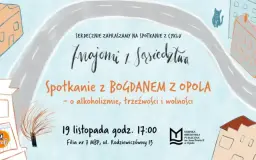 A meeting with Bogdan from Opole – on alcoholism, sobriety and freedomFilia nr 7, Opole
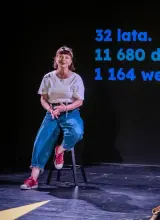 I’VE STEPPED OUT OF MYSELF, I’LL BE RIGHT BACKTeatr im. Jana Kochanowskiego, Opole, Opole
Source: Filharmonia Opolska, data retrieved . Details may change, so check them with the organiser.
Also at Sala koncertowa
Nearby in the coming days
 Open Days | Urban Lab Opole’s 1st BirthdayUrban Lab Opole, Opole
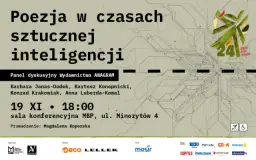 “Poetry in the Age of Artificial Intelligence” | ANAGRAM Publishing House panel discussion with Barbara Janas-Dudek, Bartosz Konopnicki, Konrad Krakowiak and Anna Luberda-KowalBiblioteka Główna – Sala konferencyjna, Opole
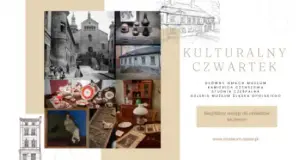 Cultural Thursday – free admission to all Muzeum Śląska Opolskiego sitesMuzeum Śląska Opolskiego, Opole
 Publication: A Princely Garden of the Arts – in the Wirtembergs’ Room, available to downloadMuzeum Śląska Opolskiego, Opole, Opole